
For years, businesses have debated whether people are more productive working from home or in an office. Studies have been commissioned, surveys have been conducted and opinions have been fiercely defended on both sides.
But perhaps we’ve been asking the wrong question.
Productivity matters, of course. Every business wants its people to be effective and engaged. Yet a growing body of research suggests that the most important impact of workplace attendance may have little to do with output and far more to do with something fundamentally human: connection.
Recent research published in the journal Science examined the relationship between the growth of remote working and rising levels of depression and mental distress. While mental health is influenced by many factors, the study suggests that reduced social interaction may be a significant contributor to worsening outcomes at a population level.
This does not mean remote working is inherently harmful. Many people thrive when working from home and value the flexibility it provides. However, the findings raise an important question: if work has become more flexible, have we unintentionally become more isolated?
Why Human Connection Matters
Humans are social creatures. Strong social relationships are consistently linked to improved wellbeing, lower stress levels and greater life satisfaction. While family and friends play an important role, the workplace remains one of the few places where adults regularly form new relationships outside their existing social circles.
Think about the interactions that happen naturally in a workplace. Conversations before meetings begin, coffee breaks with colleagues, helping someone solve a problem, celebrating successes or simply sharing experiences throughout the day. These moments rarely appear on a productivity report, yet they are often what create a sense of belonging.
When people work remotely full-time, these interactions can disappear. Work risks becoming a series of scheduled video calls separated by long periods of solitude. For some individuals this works perfectly well, but for many others the absence of everyday social contact can have a significant impact over time.
The Office as Social Infrastructure
Traditionally, offices have been viewed as places where work gets done. Increasingly, they should be viewed as social infrastructure.
For younger employees starting their careers, the office is often where they learn from more experienced colleagues. For new starters, it provides an opportunity to build relationships and understand company culture. For business owners, it offers a community of peers who understand the challenges and opportunities they face.
In an age where more of our lives are conducted through screens, the office remains one of the few environments where spontaneous human interaction can occur naturally.
The challenge is that simply bringing people back into a building does not automatically create these benefits.
Not All Offices Deliver Connection
Many modern workplaces have become highly automated. Access control, visitor management, room bookings, printing and customer support are increasingly delivered through apps, portals and ticketing systems.
Technology undoubtedly improves efficiency, but it can also remove the human interactions that make workplaces valuable.
An office can be full of people and still feel lonely.
We’ve all encountered workplace environments where individuals arrive, sit at a desk, interact primarily with screens and leave at the end of the day without speaking to anyone beyond a scheduled meeting. In these spaces, the social benefits of office attendance are limited because the environment itself does little to encourage meaningful interaction.
If the future of work is partly about combating isolation, simply providing desks and Wi-Fi is not enough.
Why Concierge-Led Workspaces Matter
At Arena Offices, we believe that great workplaces are built around people rather than systems.
Technology has an important role to play, but it should support human interaction rather than replace it. That’s why our centres are designed around a concierge-led approach, where personal service and community remain at the heart of the customer experience.
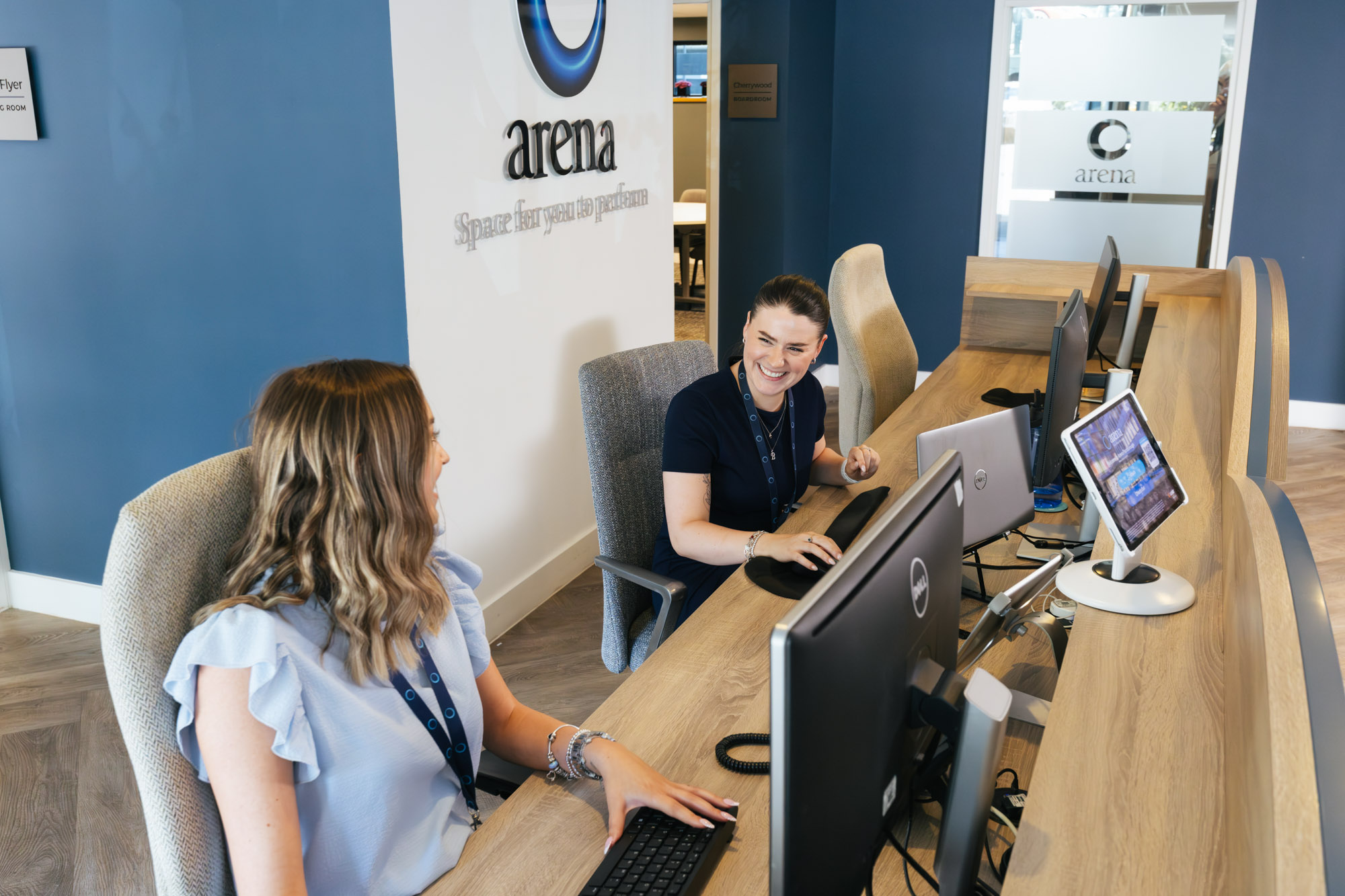
Our on-site teams know customers by name. They welcome visitors personally, help businesses resolve problems quickly and create opportunities for tenants to connect with one another. Whether it’s helping a new customer settle in, recommending a local supplier or introducing two businesses that could benefit from working together, these small interactions help create a genuine sense of community.
A mobile app can open a door.
A concierge can open a conversation.
That distinction matters. Research suggests that social connection is one of the greatest benefits of workplace attendance. If that’s true, then successful office providers must focus not only on buildings and technology but on creating environments where people genuinely feel recognised, supported and connected.
The Future Is About Balance
The future of work is unlikely to be fully remote or fully office-based. Instead, the most successful organisations will find ways to combine flexibility with connection.
Employees increasingly value the freedom to choose where they work. At the same time, businesses recognise the importance of culture, collaboration and relationship-building. The challenge is creating workplaces that people want to attend because they add value beyond providing a desk.
The best offices will not compete with home on convenience. They will offer something different: community, support, learning opportunities and human interaction.
A Better Question
For years, we’ve asked whether the office makes people more productive.
That’s still worth discussing.
But perhaps the more important question is whether the office helps people feel more connected.
In an increasingly digital world, connection may be one of the most valuable things a workplace can provide. The office is not simply somewhere we work.
At its best, it is somewhere we belong.